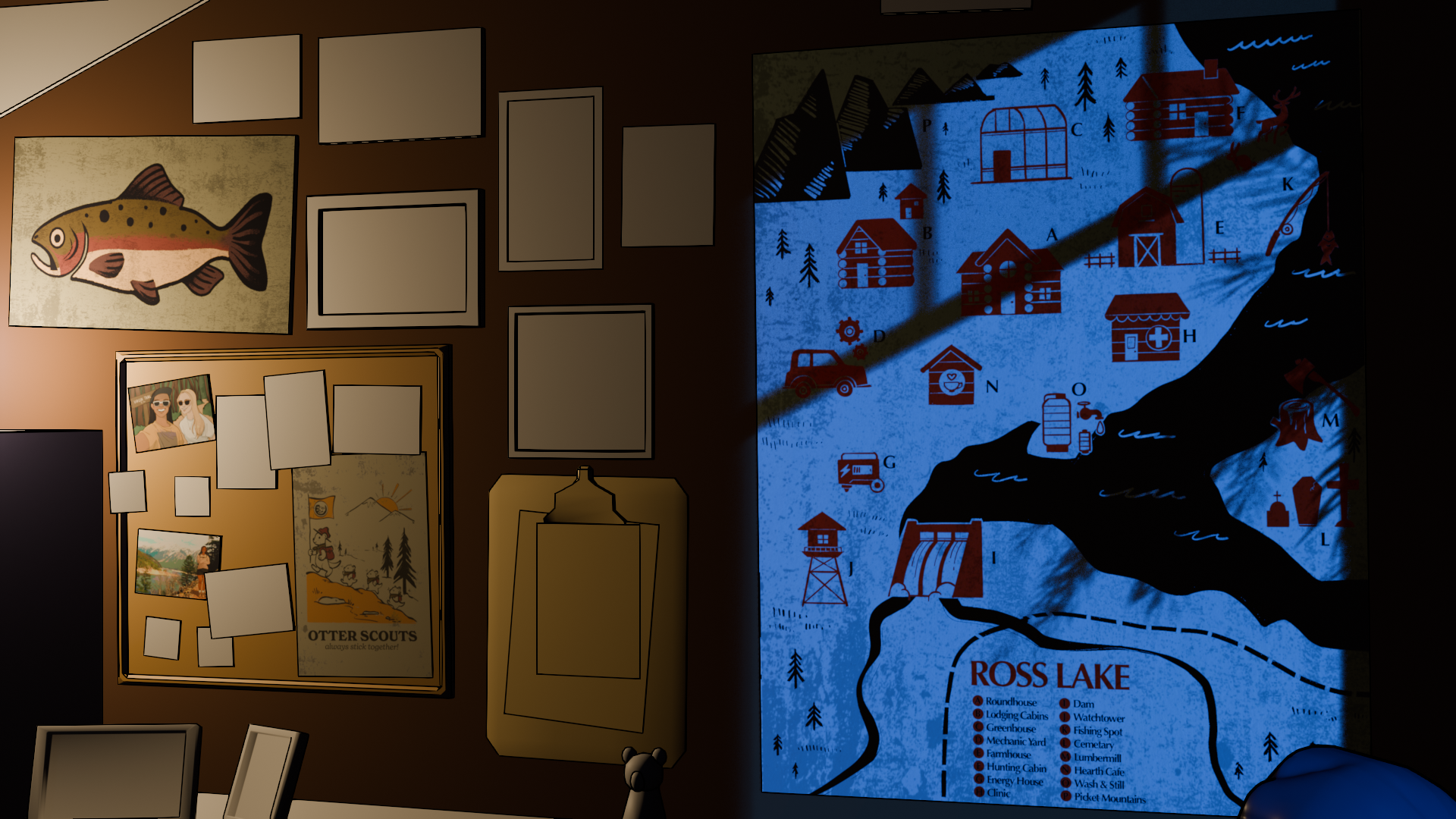
ROSS LAKE
SUMMARY
Nestled between snow capped peaks and sprawling pine forests, Ross Lake's remote location has preserved a glimmer of hope in the face of an apocalypse.
Originally established as a resort and summer camp in the days when national parks still existed, the huddling of villages was abandoned as government rule shifted, wages dwindled, and it could hardly turn profit. Its second bout of popularity came with the outbreak. As community elders tell it, a few weary survivors had been hiking through the region for days after fleeing their cities - battered and barely clinging to life in the brutal winter. Only when all hope seemed lost did they see it: a glittering diamond of a lake surrounded by warm, waiting cabins.
In the days since Ross Lake's numbers have grown rapidly, and not just from original settlers' descendents. Unlike other closed off and hostile communities, Ross Lake has earned a reputation for welcoming survivors no matter the path that led them there.
Its founders established a simple rule heeded to this day: As long as one is willing to lend a hand in preparing the feast, they will always have a seat at the table.
While some may call this philosophy naive, Ross Lake has continued to thrive twenty nine years since the supposed end of the world. Many of the original founders still sit on the council that keeps the community running. Under their guidance societal trust, resource delegation, and good will between families are held as core values. The day to day life of a citizen in Ross Lake revolves around doing work for the benefit of the community over oneself.
It is often said that its geography has allowed Ross Lake to both thrive and stay peaceful. Its coveted position between the mountains makes it near inaccessible to any undead, who would have to travel miles from the nearest city. Hollow sightings are rare.
Perhaps the community's most valued asset, however, is its dam. When the power grids around the world failed the cabins at Ross Lake remained lit from the constant churn of the rapids. They possess one of the last few self-sufficient sources of renewable energy left - a blessing that keeps the lights on, the water running, and the people warm.
MAP DESCRIPTIONS
A. Roundhouse
The beating heart of Ross Lake's community. When one enters the broad oak doors they can expect a town hall meeting, a tanning workshop, and a kindergarten assembly all converging in one building.
B. Lodging Cabins
A boon from Ross Lake's former life as a resort and summer camp, all cabins are fully furnished with kitchens, electricity, and running water. Cabin assignments are decided by the elders and based on need: families occupying the largest by the mountain range and singles in the smaller cabins dotting the shoreline.
C. Greenhouse
When snowfall covers the camp, the Greenhouse feeds residents during the long winter months. Agriculturalists have had luck growing a handful of exotic plants, much to the delight of grandmothers baking banana bread.
D. Mechanic Yard
In the far reaches of the mountains cars are few and far between, Ross Lake's mechanics work miracles with whatever scrap metal they can get. Day to day they inspect, repair, and service the machines around the campground.
E. Farmhouse
From the late summer through the fall the farmhouse requires the most hands to keep Ross Lake running. Leafy greens, root vegetables, and quail are either processed for dinner or canned and pickled for the winter ahead.
F. Hunting Cabin
As the decades have gone by Ross Lake has seen the gradual return of its fauna: blacktail deer, snowhares, and wild turkey. Hunting is relegated to bows and traps, bullets are a limited resource and the crack of a gun attracts Hollows more than any animal ever might.
G. Energy House
A small shed that houses an extremely vital resource: Ross Lake's generators. Only the most experienced mechanics are granted the key for entrance.
H. Clinic
As manmade medicinal resources have dwindled, natural remedies have emerged as the primary form of treatment. If one comes in with a mild malady expect to be healed with Western Red Cedar, Nettle, and Elderberry — only for more serious afflictions is the emergency medical storage accessed.
I. Dam
An Old World relic that has allowed Ross Lake to achieve relative comfort above the cruel standards of survival in a post-apocalyptic world. Ross Dam is the most significant source of electricity and clean water in the region.
J. Watchtower
Constructed to keep an eye on the coming and goings of Ross Lake's perimeter - human or otherwise. Guards rotate in and out on an 8 hour basis, only relinquishing their single sniper rifle upon the next post's arrival.
K. Fishing Spot
The primary protein source for a growing group of campers. In the Spring fishermen will arrive in the wee hours of the morning, only returning once they have more than enough rainbow trout for a solstice feast.
Cemetery
Bodies are buried as far as they are from the main camp due to fears of reanimation. In recent years, some recall hearing soft music play from across the river.
M. Lumbermill
Every year more children are born to Ross Lake residents and every year more cabins are needed. The camp's lumber mill processes the raw Douglas-fir logs from the surrounding woods into usable material.
N. Hearth Cafe
A large dining hall that hosts rows upon rows of picnic tables for Ross Lake's communal meals. The daily menu is posted outside on the chalkboard — Dandelion root tea is the most popular drink of choice, only eclipsed when a lucky scavenger happens upon coffee beans.
O. Wash and Still
A section of the lake reserved for water treatment and washing clothing and sheets. In the dead of summer playful splashing and shouts fill in the air as laundry is forgotten in favor of cooling off in the humid heat.
P. Picket Mountains
The boundary that protects the remote Ross Lake Resort from the dangers of the outside world. Lovestruck teenagers are known to sneak up mountain clearings for a bit of fun, much to the chagrin of their parents and village elders.